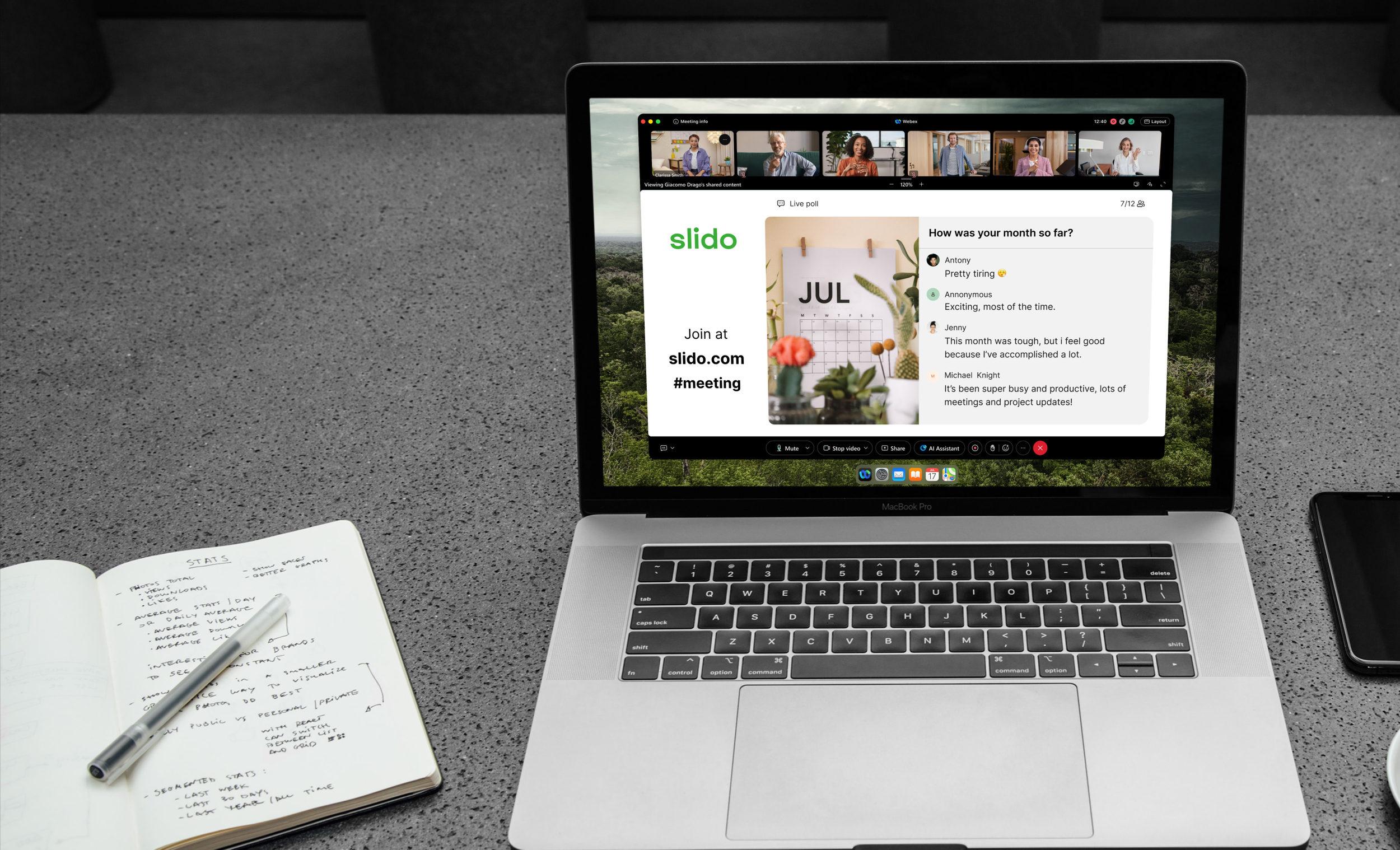
Slido — Product Vision
Aligning for the Future with Webex
By early 2024, Slido had no unifying product vision. Both the company and Cisco were facing big shifts. We needed to give teams clarity and direction, while showing how Slido could strengthen the Webex experience. I shaped the process, led the design work, and worked closely with leadership to bring a scattered set of ideas into a story the whole company could act on.
Role
Product Design Lead, Product Strategy, UX/UI Design
Scope
Vision, Strategy, Research, Film
Company
Slido (Cisco)
Duration
4 months (Phase 1) + ongoing
12
Leadership interviews
50+
Feature concepts captured
0
Shared visions at the start
The Problem
Multiple visions. No shared direction.
Executives had drafted several product visions, but instead of simplifying, each grew more complex. Teams had generated dozens of feature ideas with no agreement on which ones mattered most.
What was needed was clear: a vision that gave product teams something they could act on now, while inspiring the wider company about what came next.
~70%
The product's future wasn't in conferences
~70% of Slido events in 2024 had between 5 and 30 participants. The historical focus on conferences and all-hands (town halls) no longer matched how people actually used the product. The vision needed to reorient Slido toward smaller team meetings, led by team leads who needed better tools for preparation, alignment, and follow-up.
Leaders wanted something ambitious. Teams needed something actionable. The vision needed to work for both.
Bringing focus
2024 — 4 months
I started with 12 interviews with leaders, including the GM and department heads, to understand where alignment was breaking down. In parallel, we ran ideas sessions across the company, capturing over 50 feature concepts which we read and clustered into categories.
01
01
Stakeholder interviews
12 conversations with leaders to understand how they perceived Slido's future, where they saw gaps, and what would make a vision stick.
02
Playback session
Presented what we'd heard back to all stakeholders. Used Slido itself to run live polls and Q&A, giving people a voice in shaping the direction.
03
Critique with persona research
Combined persona insights with opportunity areas in a structured critique. Three alignment touchpoints before we started designing.
The playback surfaced a clear gap: the existing vision statement was too broad. Terms like "business professionals" and "meaningful conversations" didn't give teams anything concrete to design against. The critique then grounded the opportunity areas in real user challenges, connecting abstract strategy to specific problems worth solving.
Grounding the vision in real users
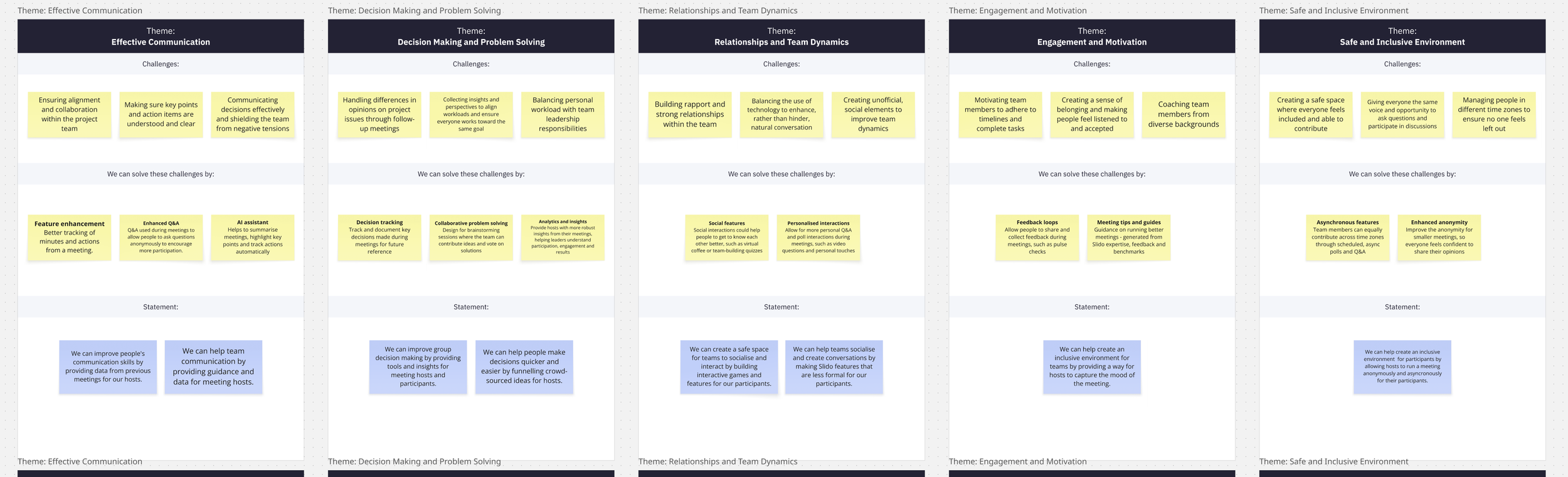
We narrowed five target segments into two core personas, both types of team lead, each with distinct challenges and ways of working. We mapped their needs across five themes: effective communication, decision making, relationships and team dynamics, engagement and motivation, and creating safe, inclusive environments.
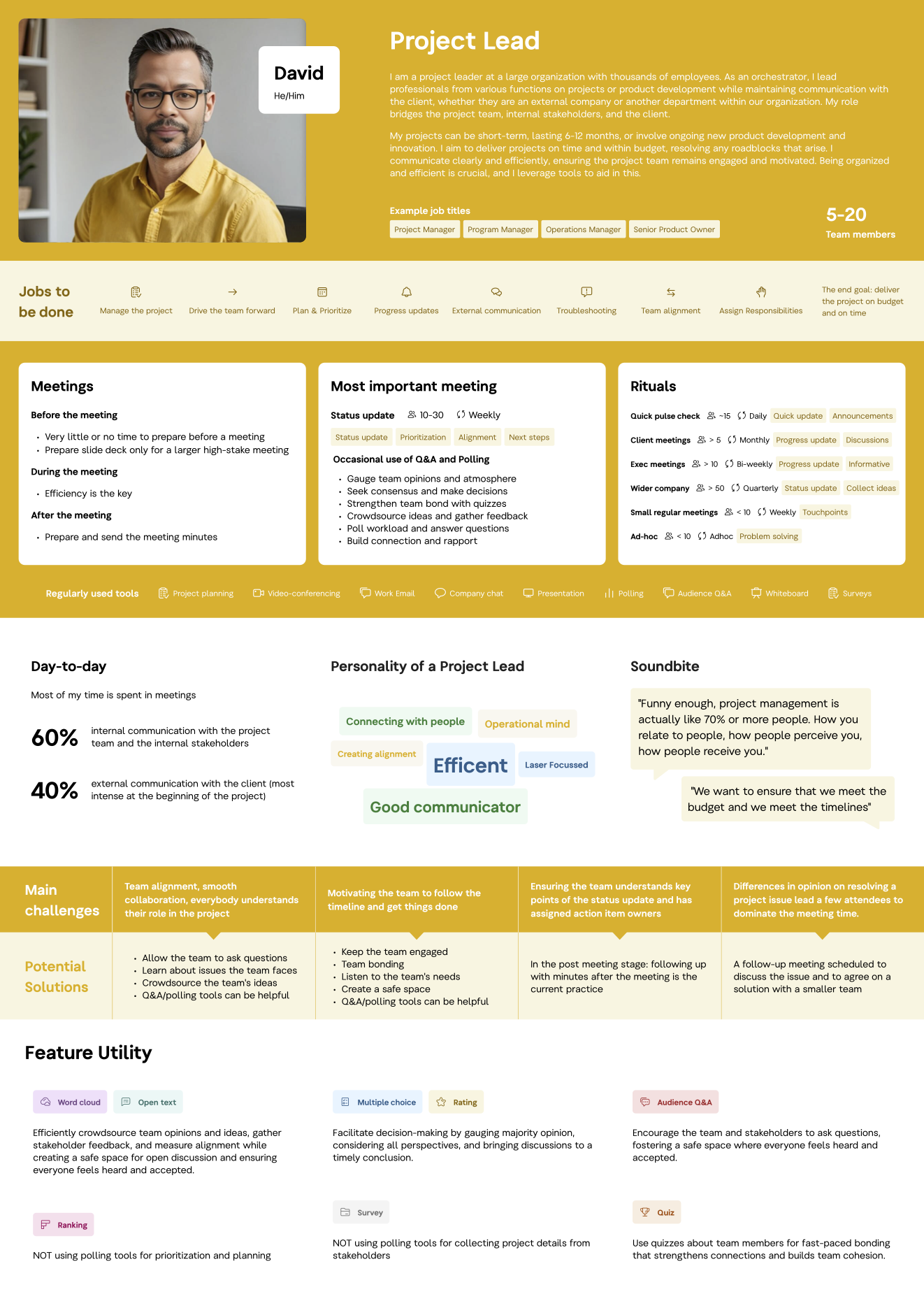
Project Leads
Leading changeable groups through projects. Accountable for timelines and delivery, usually without direct reports. Needs tools that reduce prep time, keep teams aligned on decisions, and surface the right input at the right moment.
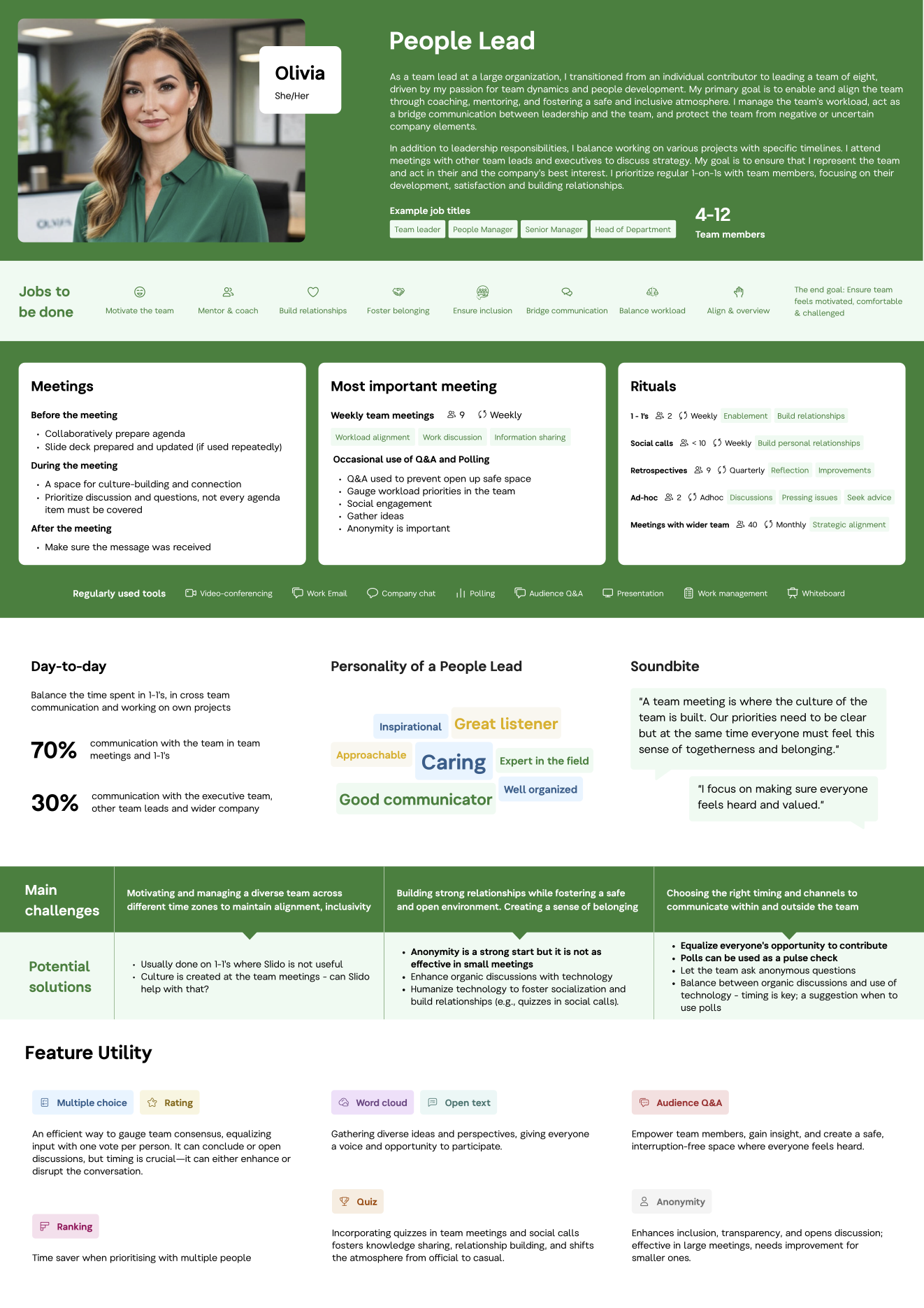
People Leads
Managing a stable team. Responsible for performance, growth, and connection, usually with direct reports. Needs tools that make it easy to hear from everyone, build belonging, and coach across diverse backgrounds.
Two personas grounded in research, mapped across four opportunity areas: preparation, running meetings, follow-up, and enterprise.
What We Created
A layered set of artefacts at different altitudes
Each audience needed to engage at the level that mattered to them. Leaders got ambition; teams got clarity. Both grounded in the same research.
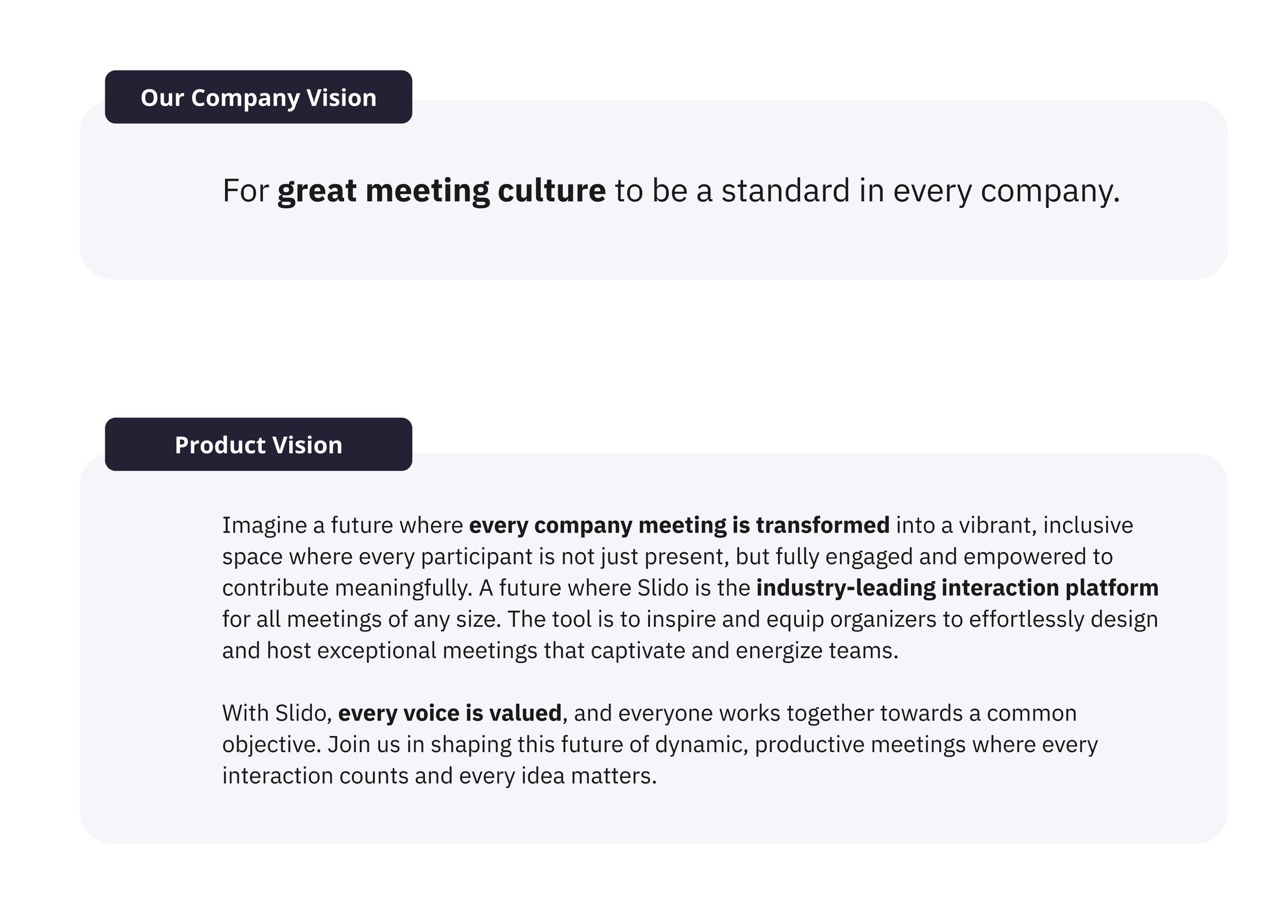
Vision statement
The strategic artefact that product teams used for roadmap planning. Stable for 3-5 years, specific enough to design against.
Opportunity areas
Preparation, running meetings, follow-up, and enterprise. Mapped to personas and the five Team Lead challenge themes.
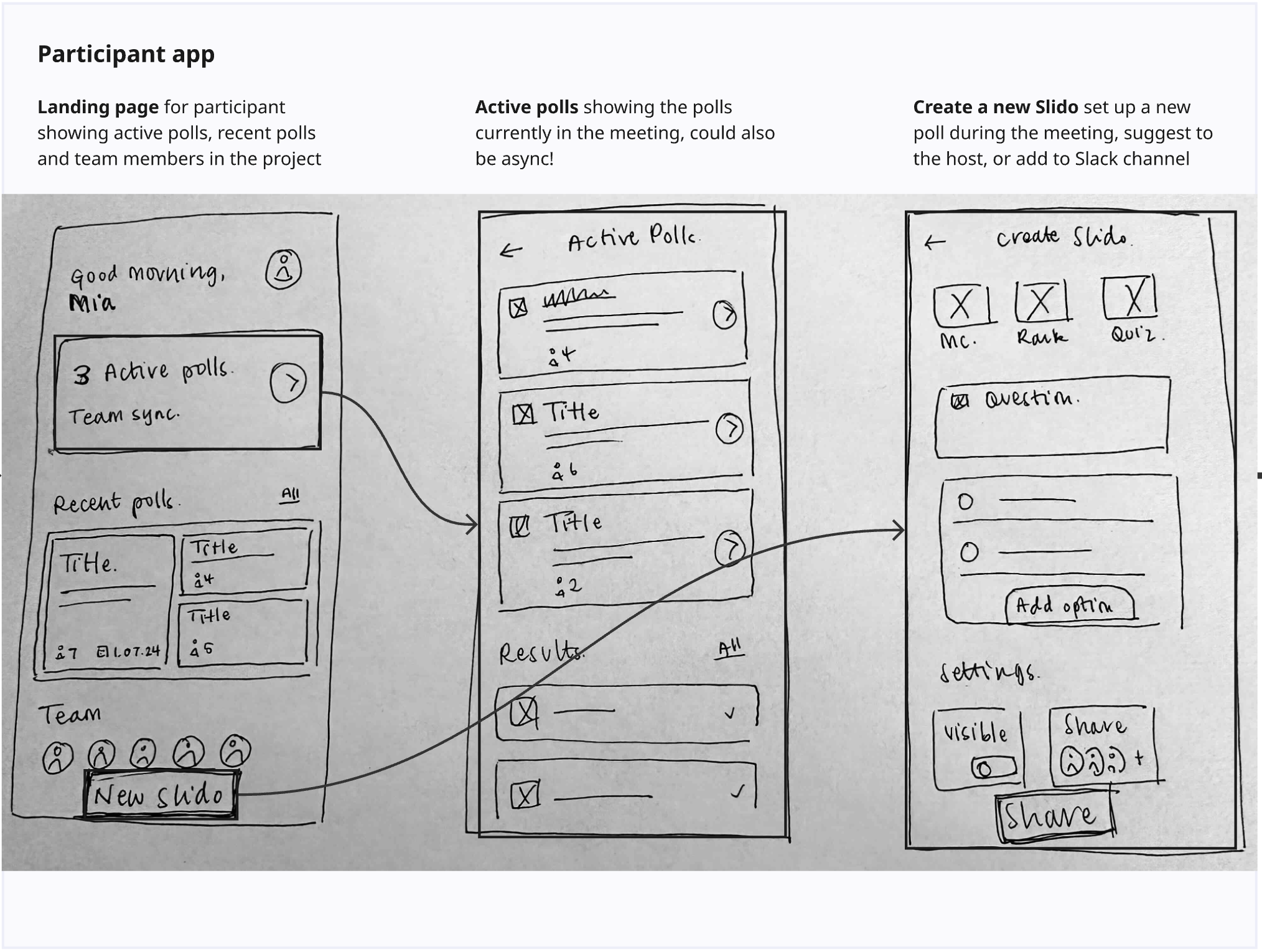
Early concepts
AI-assisted polls, integrations, participant experiences. Grounded in research, not speculation. Two are now in build.
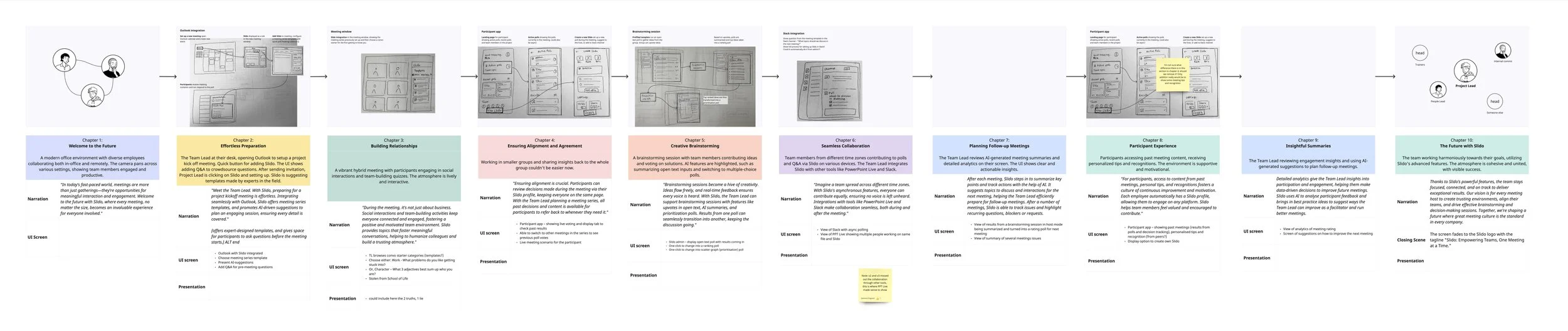
Scripting the vision film, chapter by chapter
Before any production, we mapped the film's narrative across nine chapters: from effortless preparation through creative brainstorming, seamless collaboration, and insightful summaries. Each chapter paired a narrative arc with UI concepts and mapped directly to a Team Lead challenge. The story wasn't invented. It was built from what we heard.
From storyboard to screen
The film communicated the product future in a way documents and slide decks couldn't. It showed what Slido could become as an experience, not a feature list.
A vision people could feel, not just read
The film became the centrepiece of how we communicated where Slido was heading. We presented it to the whole company alongside a detailed breakdown of every chapter's challenges and feature opportunities.
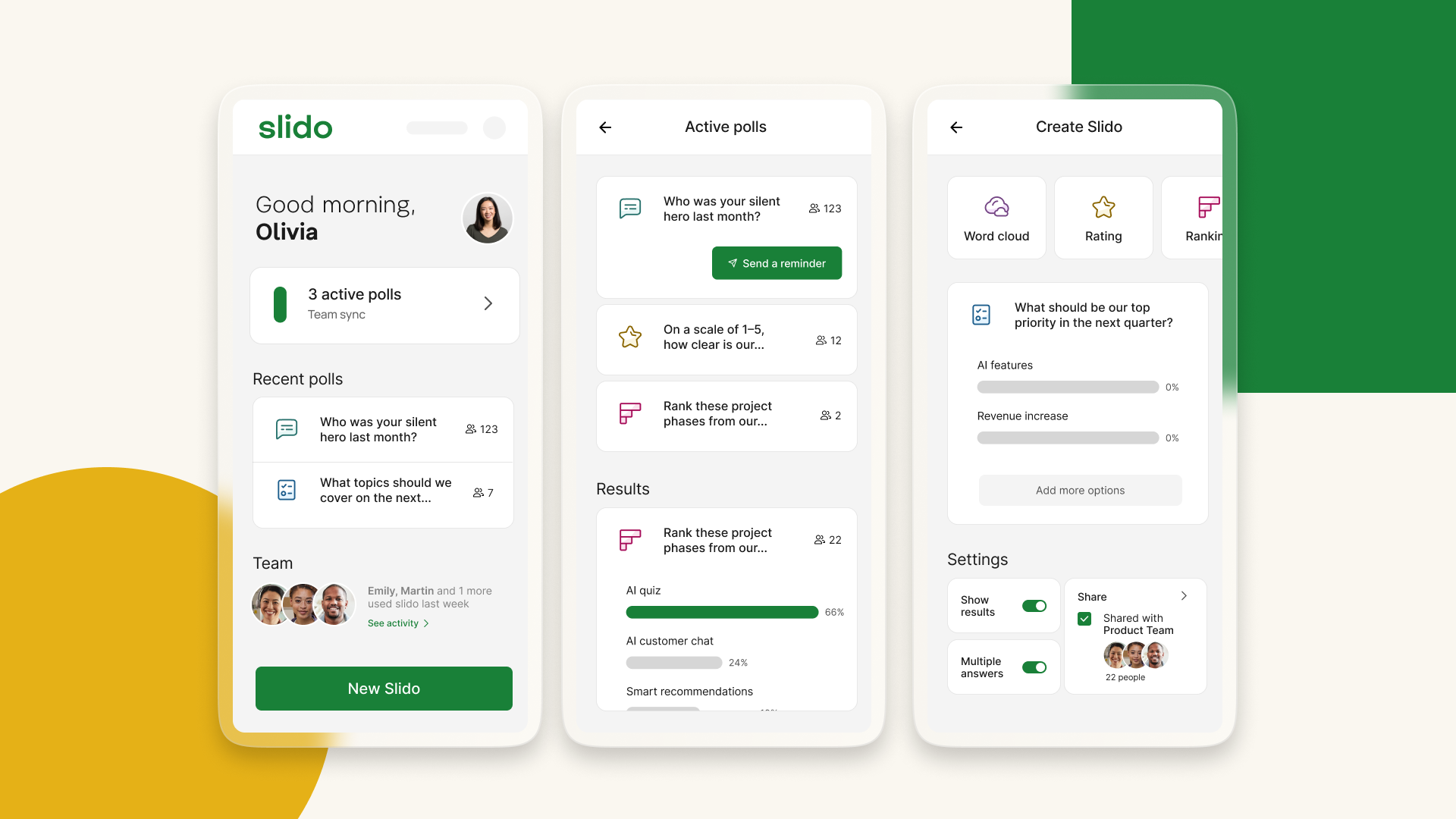
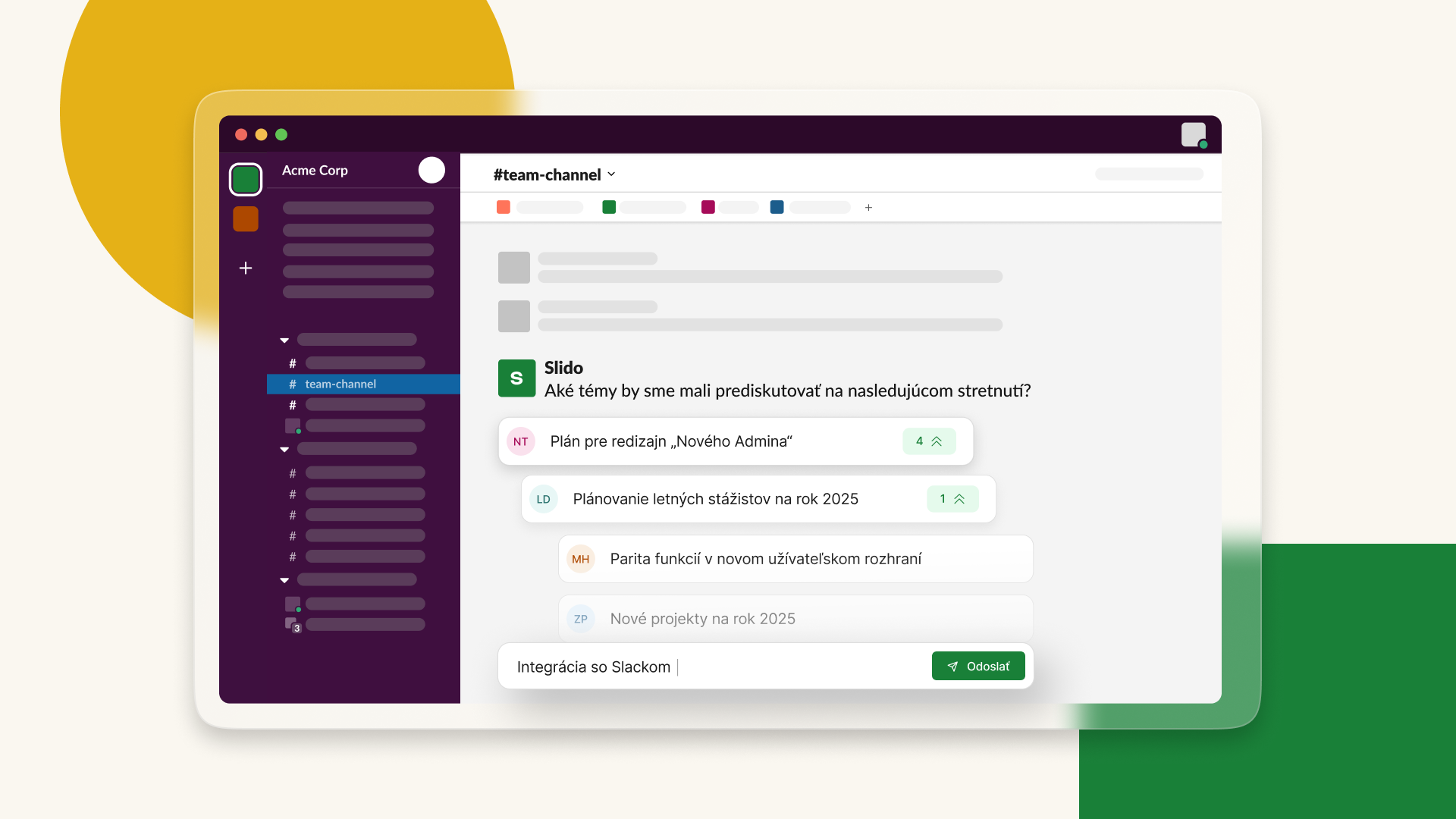
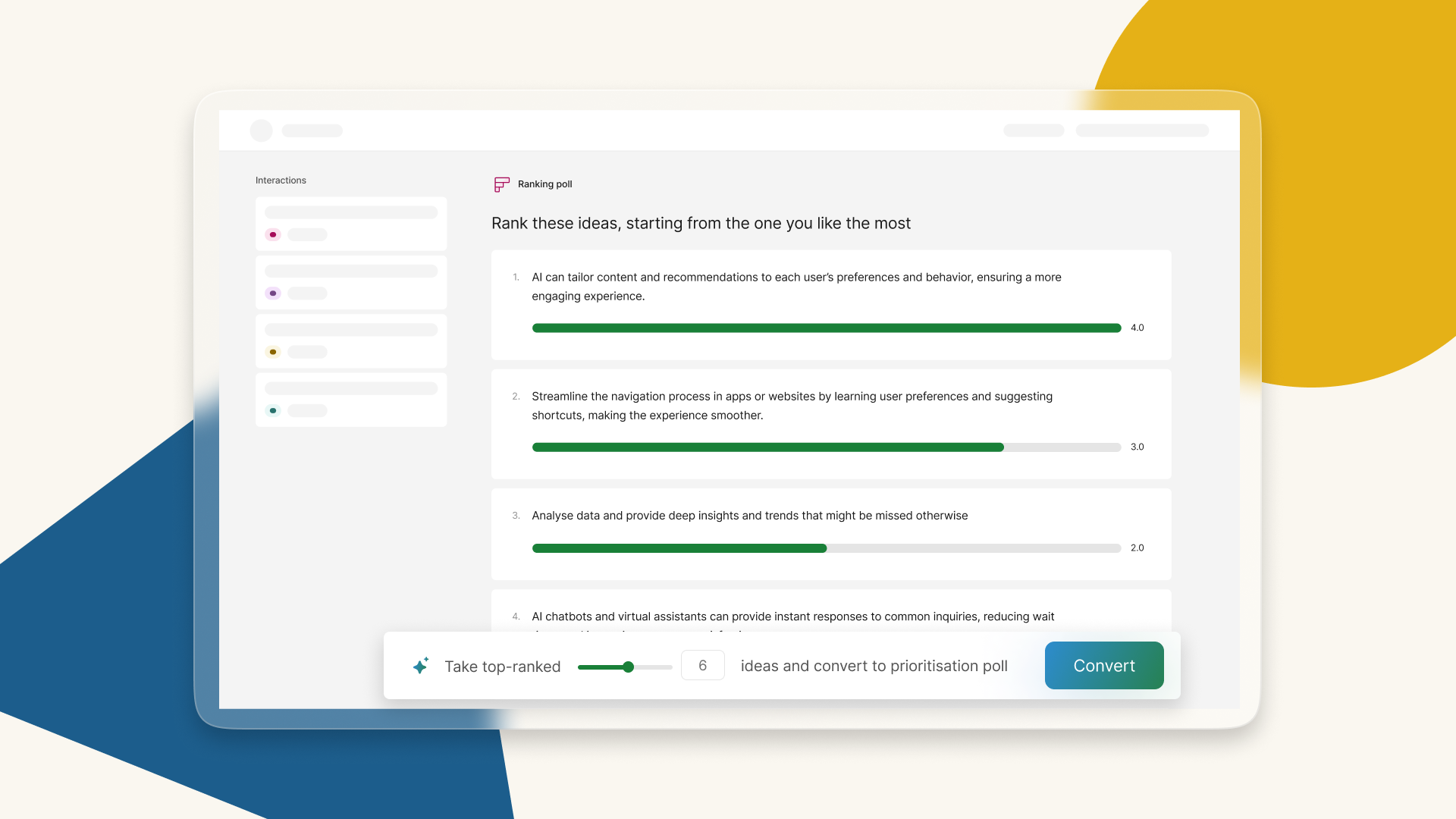
Concept screens from the vision film. Each maps to a Team Lead challenge: preparation, brainstorming, collaboration, and post-meeting insight.
Responding to a restructure
2025 — 4 weeks
Cisco announced a restructure. Webex was under pressure. The new priorities were specific: reduce effort and increase value with AI, and improve the Webex suite experience. We had four weeks to reshape the vision around those two goals before a leadership offsite.
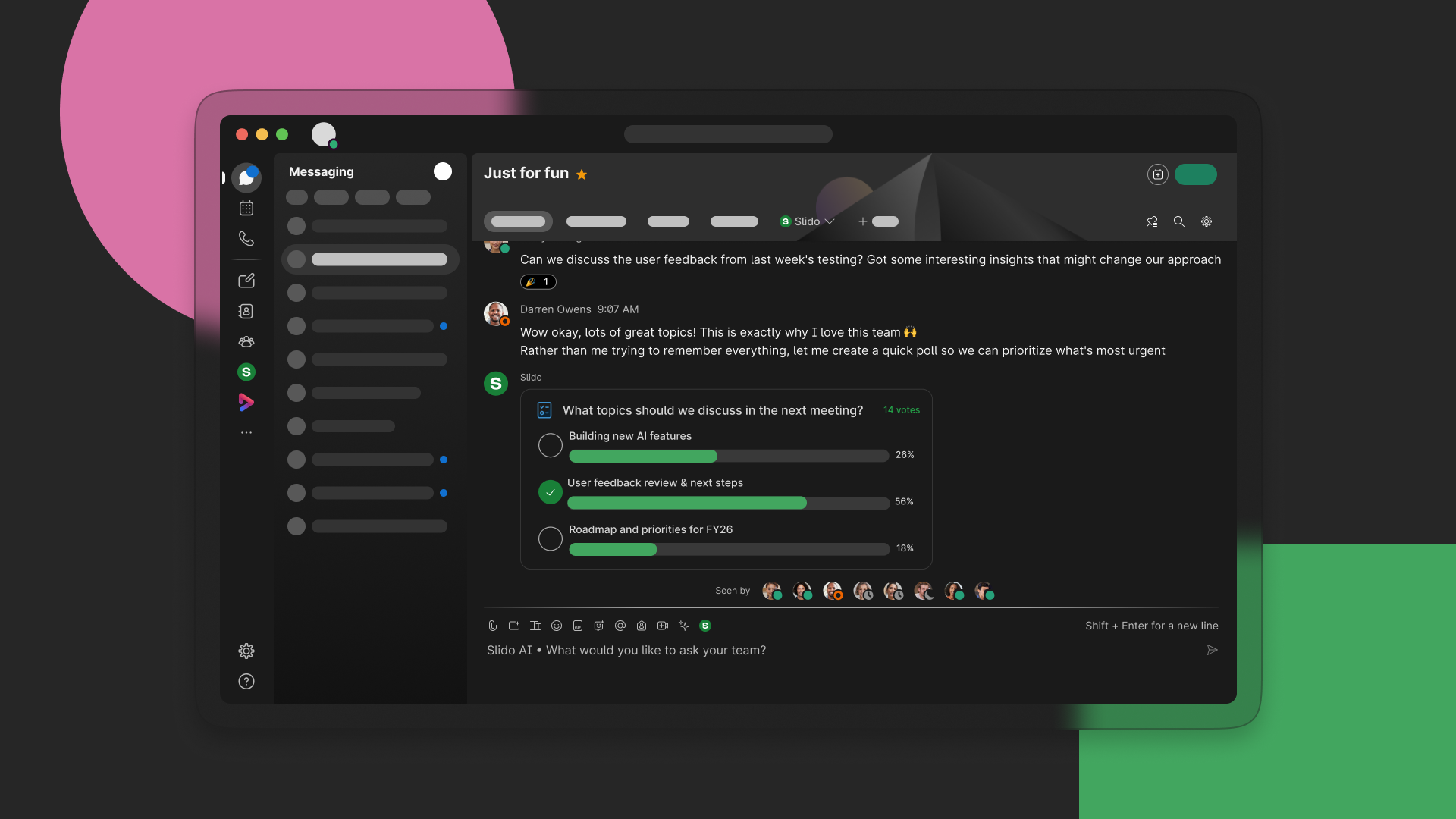
I reframed the concepts around AI and suite value, working closely with our GM. The designs positioned Slido as a core partner in Webex's future. Our GM took them to the offsite in June.
02
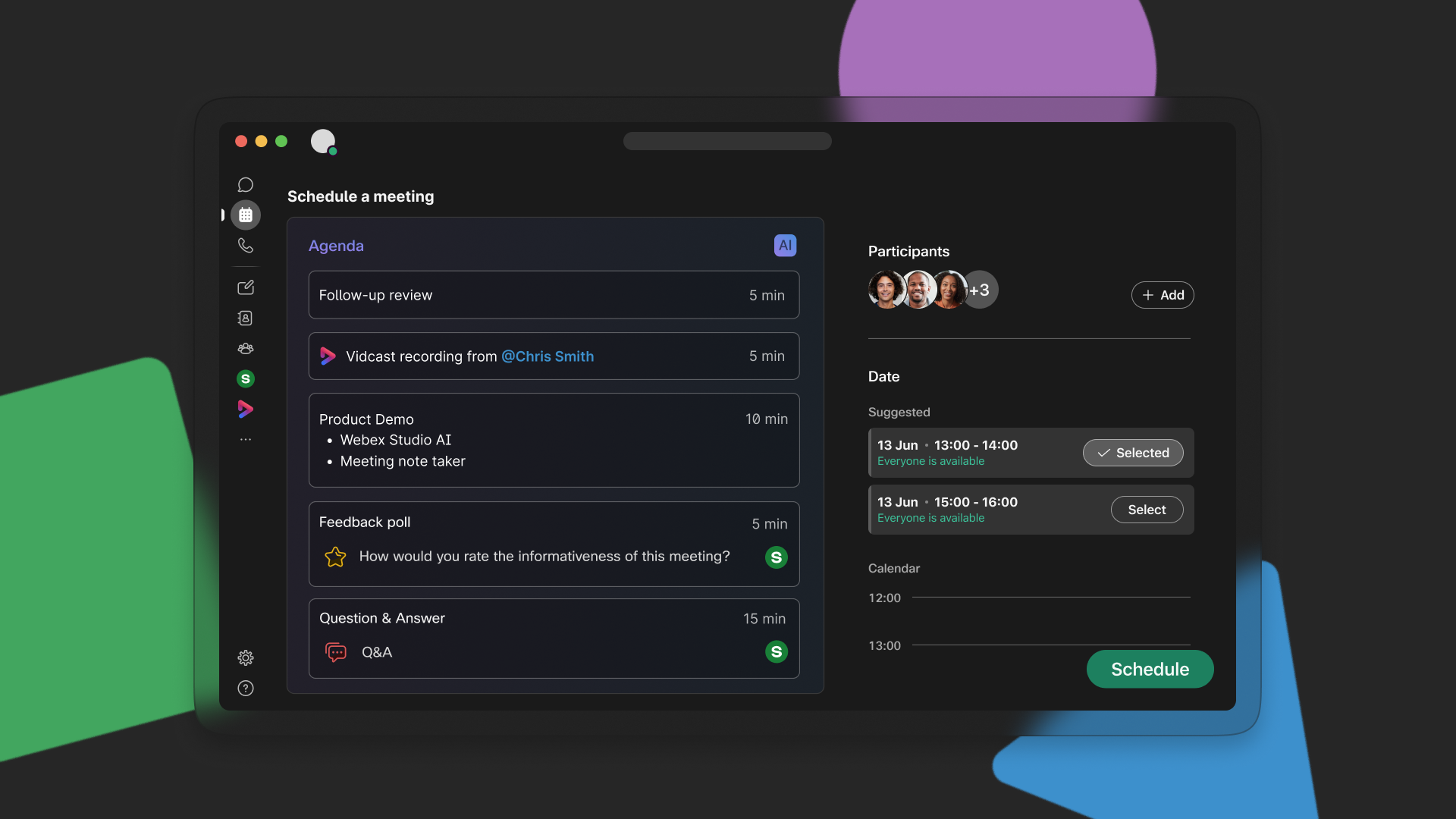
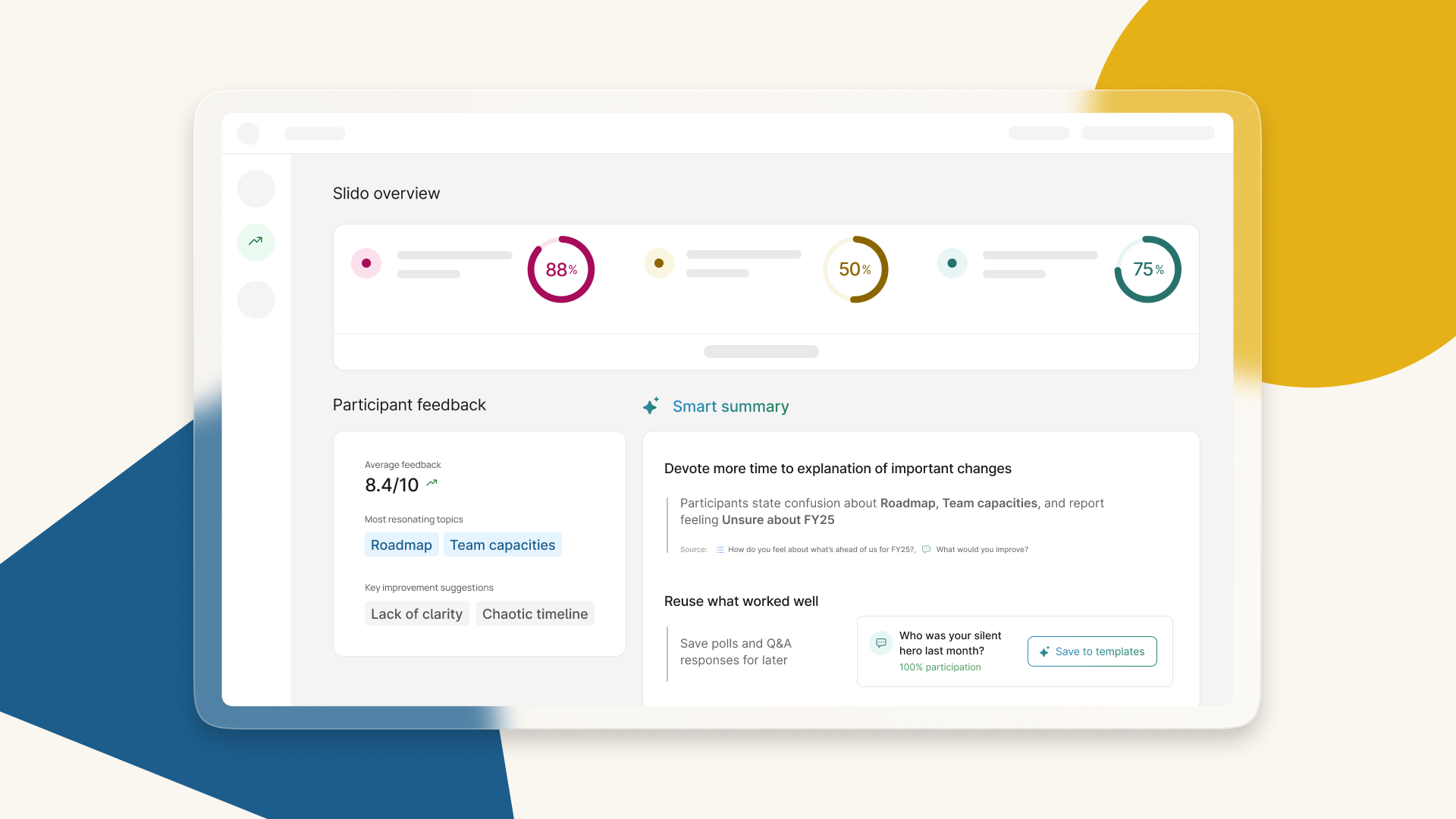
Slido + Webex App as Meeting Companion
Vision for Slido integrated into a Webex app as a seamless, intelligent meeting companion.
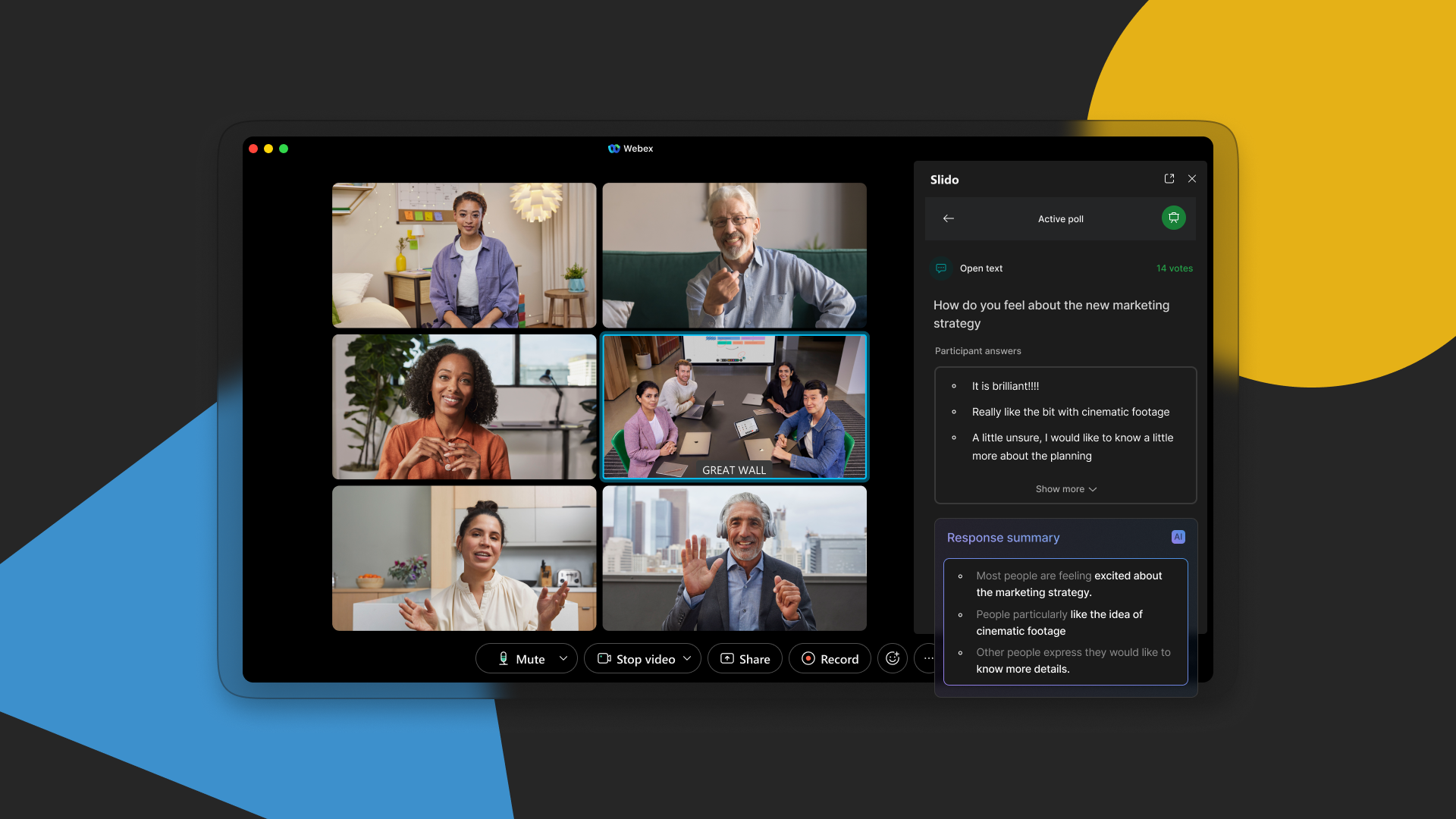
Increasing the value of engagement with AI
Enable AI summaries throughout the UX to help users consume insights more effectively.
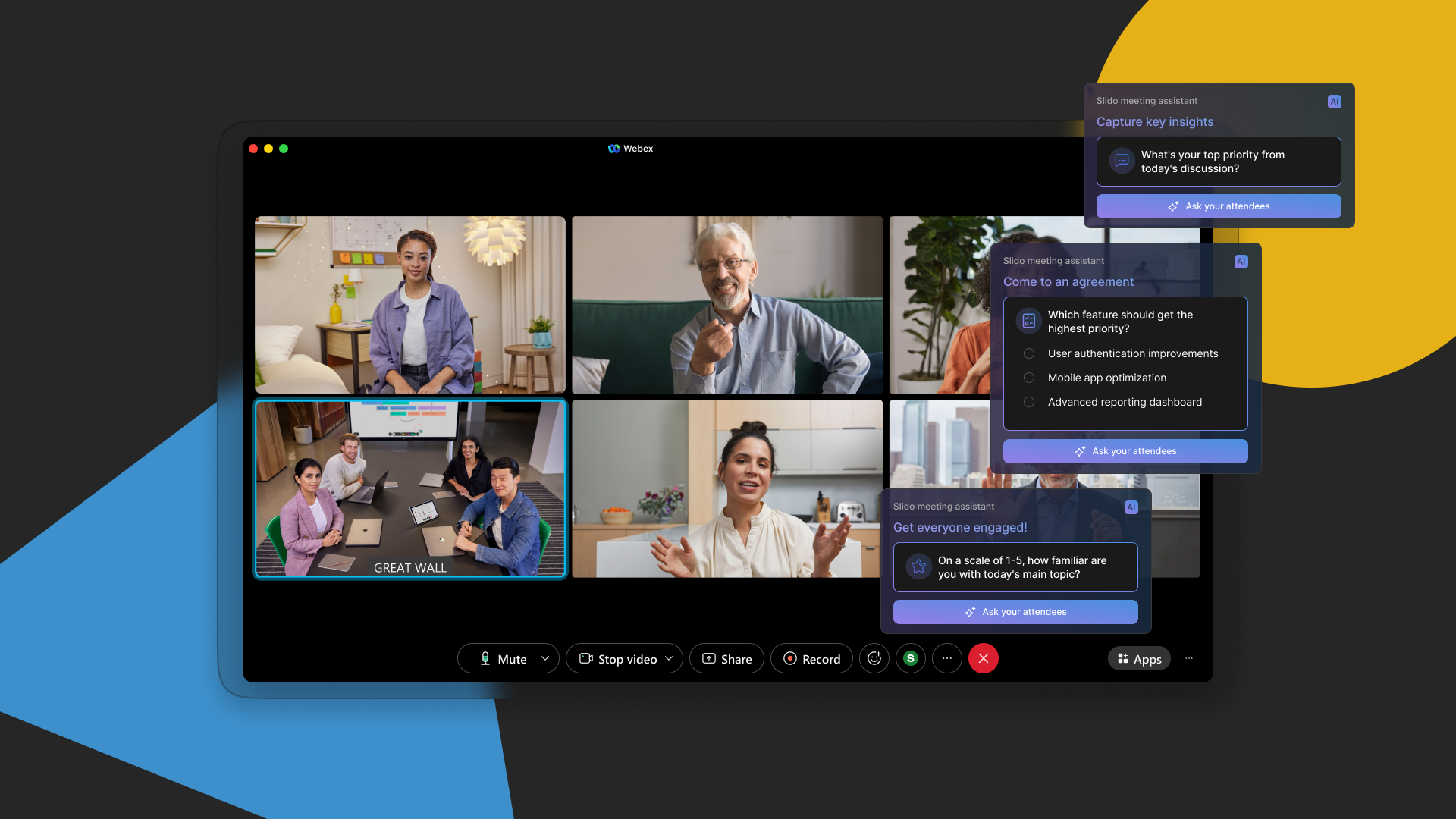
Provide AI-first superior user experience
Simple, delightful, yet versatile, reflecting user behaviour in age of AI.
Build async experience
Drive usage & stickiness, by: Integrating Slido to Messaging, supporting key asynchronous use-cases, building API to become a service for asynchronous collection of insights.
Opening doors
A joint sprint with Webex and Vidcast
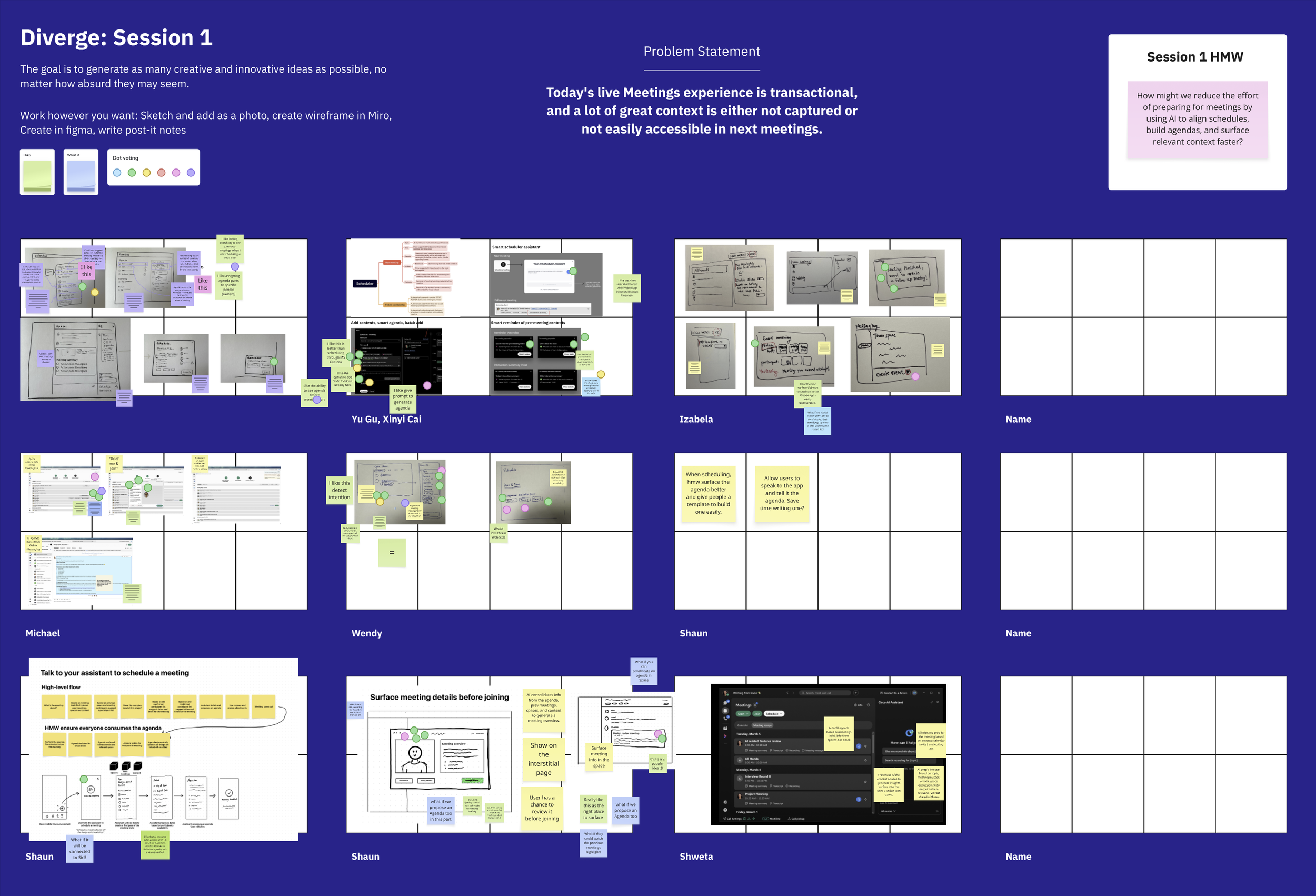
The vision opened doors. We were invited to run a design sprint with Webex and Vidcast: 19 participants across three time zones.
I co-facilitated the sprint. One of the most promising ideas to emerge, AI-generated polls from meeting transcripts, is now moving towards launch. I'm leading the design.
Outcomes
What changed
2
Vision concepts now in development
One from each phase
5–30
The meeting size Slido now designs for
Previously conferences and all-hands
2
Personas adopted company-wide
Used in roadmap planning across all teams
AI thinking that shaped the wider product
Beyond the two concepts now in development, the AI work from both vision phases influenced projects across Slido. Traditional features like polls and Q&A gained depth through AI capabilities that originated here. It didn't sit on a shelf. It changed what got built.
A strategic direction that stuck
The shift from conferences and all-hands toward smaller team meetings is still how Slido operates today. The vision remains a reference point for new projects and company direction. It didn't just align people in the moment. It defined where the product was heading.
Looking Back
This project gave Slido something it had never had: a shared direction that teams could act on and leadership could stand behind.
Two concepts are in development, the Webex relationship is stronger, and design is leading the conversation about what comes next. Giving different audiences different ways into the same story is what made the alignment work.